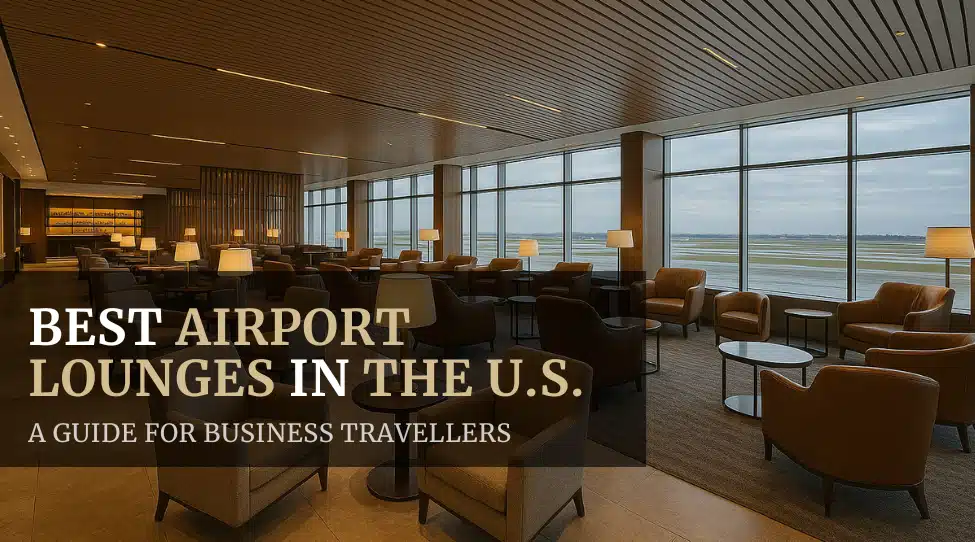
The spatial isolation, security clearance integration, tarmac transfer logistics, and high-stakes networking environment required to evaluate and utilize ultra-premium airport facilities within major commercial aviation hubs across the United States constitute a complex convergence of federal aviation regulations, corporate travel security, premium hospitality asset management, and executive productivity engineering. When corporate travel directors, chief security officers, and enterprise administrative boards investigate luxury executive airport lounges USA, they are engaging with a multi-layered asset and service ecosystem that diverges entirely from standard airline frequent-flyer lounges or crowded credit card waiting areas. Delivering an environment that enables continuous operational velocity and absolute privacy for traveling executives while navigating strict Transportation Security Administration (TSA) boundaries and airfield access protocols demands an exhaustive examination of private terminal real estate, tarmac chauffeuring logistics, biometric clearance pipelines, and the delicate balance between high-density commercial air travel and ultra-exclusive sanctuary design.
Organizations frequently approach the procurement and utilization of elite aviation facilities through polarized lenses, either viewing them as unmonitored executive perks of secondary value or reducing terminal selection to a purely transactional airline club membership calculation. This superficial approach ignores the stark structural realities governing modern executive mobility and travel risk management. Senior corporate leadership teams are routinely constrained by compressed transit windows, high-profile intellectual property exposure, active merger and acquisition negotiations, and the immense opportunity cost of operational friction encountered within public airport concourses. Consequently, systematically evaluating and structuring comprehensive enterprise ground-transition workflows requires an analytical framework that uncovers hidden security vulnerabilities, service-tier differentials, and true human-capital protection metrics.
When corporate travel managers and security directors research luxury executive airport lounges usa, they are evaluating structured operational environments that govern private tarmac access, dedicated federal security screening lanes, bespoke hospitality suites, and commercial airline integration at the highest organizational tiers. A pervasive error in this analytical process is assuming that executive airport luxury is defined purely by buffet quality, complimentary house wine, or comfortable leather seating within standard airline alliance lounges. In reality, elite commercial ground-transition infrastructure represents a sophisticated operational science, balancing rigorous federal security compliance against the absolute necessity of shielding high-profile executives from public visibility and terminal congestion.
A primary misunderstanding involves the boundary between traditional airline membership clubs and true private terminal ecosystems. Many organizations assume that purchasing a premium airline club membership satisfies the security and productivity requirements of traveling senior executives, only to discover that overcrowded shared spaces, public boarding gate queues, and lack of acoustic privacy leave leaders exposed to public scrutiny and operational distraction. Conversely, treating airport transit as an unmanaged individual choice ignores the severe physical security and data espionage risks present in open airport concourses. True enterprise-grade evaluations differentiate between these operational mechanics to ensure the chosen facilities align with actual corporate security policies and executive productivity goals.
Furthermore, oversimplifying the regional gateway dynamics and airfield logistical constraints across major U.S. hubs creates severe structural vulnerabilities. Depending on flight schedules and hub congestion, selecting standard terminal transit without access to private tarmac transfer networks can introduce crippling delays that neutralize the advantages of high-speed commercial air travel. Analyzing comprehensive ground-transition initiatives requires a granular examination of how private terminal locations, federal agency partnerships, tarmac vehicle escorts, and digital connectivity interact to shape ultimate enterprise travel outcomes.
Deep Contextual Background: The Evolution of Airport Hospitality and Private Terminal Infrastructure
The contemporary landscape of elite commercial airport infrastructure is the product of a multi-decade structural evolution that transitioned from rudimentary airline hospitality rooms in the mid-twentieth century to sprawling alliance hub lounges, credit-card-sponsored co-branded spaces, and ultra-exclusive private commercial terminals located entirely outside the public airport footprint. Throughout the regulated era of aviation, airline lounges served primarily as quiet waiting areas for first-class passengers and elite frequent flyers, characterized by conservative design and modest amenities.
The deregulation of the airline industry, combined with the explosive growth of premium credit card rewards and global corporate travel, fundamentally transformed airport real estate. Concourse lounges expanded rapidly to accommodate massive volumes of travelers, shifting from exclusive sanctuaries into high-traffic communal spaces. This mass democratization of traditional lounges created a distinct service gap for ultra-high-net-worth individuals, corporate executives, and diplomats requiring absolute privacy, security, and time-efficiency while flying commercial.
In recent years, the U.S. market has experienced a profound structural shift toward standalone private terminals serving commercial flights—facilities that bypass the public terminal entirely through direct partnerships with federal security and customs agencies. This evolution reflects a broader corporate understanding that navigating luxury executive airport lounges usa is not an auxiliary travel preference, but a core strategic discipline that protects executive security, maximizes productivity, and ensures seamless global mobility.
Conceptual Frameworks and Mental Models for Facility Sourcing
Evaluating and structuring complex executive airport transit initiatives requires robust mental models that synthesize spatial isolation, security clearance architecture, and time-efficiency dynamics.
The Public-to-Private Terminal Perimeter Model
This model maps the physical transition of an executive from street-side arrival to aircraft cabin door, categorizing facilities into public concourse lounges, semi-private secured airline rooms, and fully private off-concourse terminals. It demonstrates that true operational isolation requires physical separation from public passenger flows.
The Transit Friction and Time-Compression Curve
This mental model analyzes the temporal efficiency of airport navigation. It calculates total time spent queuing at standard TSA checkpoints, walking through congested terminals, and waiting at boarding gates, proving that investing in private terminal infrastructure compresses pre-flight transit time to mere minutes.
The Security and Surveillance Minimization Framework
This framework evaluates the vulnerability of executives to public observation, digital tracking, and physical security threats within airports, prioritizing facilities that eliminate public exposure through private screening and direct tarmac vehicle transport.
Key Categories or Variations
Elite airport hospitality and private terminal infrastructure across the United States manifest in distinct operational typologies, each carrying unique implementation dynamics and enterprise impact profiles.
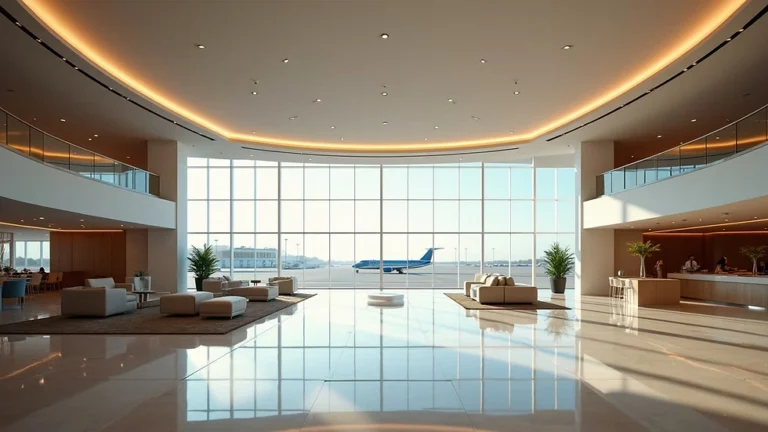
Dedicated Private Commercial Terminals (e.g., PS at LAX, DFW, ATL, MIA):Standalone private facilities located on the airfield perimeter offering private security screening, luxury suites, and direct BMW or Porsche tarmac chauffeuring to commercial aircraft. Ideal for C-suite executives, high-risk leadership, and confidential delegations. Trade-offs include high per-use service fees and limited geographic airport availability.
Flagship International First-Class Airline Lounges (e.g., United Polaris, American Flagship First): Ultra-exclusive airline-operated spaces reserved for long-haul premium cabin travelers featuring sit-down dining, private daybeds, and dedicated concierge services. Ideal for intercontinental executive travel and rapid layover recovery. Trade-offs include location within public terminal airside zones and varying crowd density.
Independent Credit Card and Priority Network Lounges (e.g., Amex Centurion, Capital One Lounges): High-end shared spaces offering craft cocktails, local chef-designed menus, and modern workstations. Ideal for frequent corporate travelers holding specific premium financial credentials. Trade-offs include frequent capacity-driven waitlists and high peak-hour crowding.
Fixed-Base Operator (FBO) Executive Suites for Commercial Connections: Private aviation terminals offering conference facilities and customs clearance utilized by commercial travelers transferring to private air charters. Ideal for complex multi-leg journeys combining commercial and private aviation. Trade-offs include administrative coordination complexity.
Bespoke Meet-and-Greet Concierge-Assisted Fast-Track Networks: Service-based airport navigation models where dedicated agents escort travelers through expedited security lanes and staff-managed transit paths. Ideal for navigating complex hub airports without private terminal facilities. Trade-offs include reliance on standard public concourse physical spaces.
Airline-Specific Exclusive Activity Pods and Quiet Rooms: Enclosed micro-environments within major hub lounges designed for confidential phone calls and focused work. Ideal for solo executives needing interim workspace during brief connections. Trade-offs include limited inventory and high demand.
Typology Comparison Matrix
Facility Typology
Primary Operational Mechanism
Core Strategic Advantage
Main Operational Vulnerability
Optimal Organization Profile
Private Commercial Terminals
Off-concourse private buildings
Absolute privacy and tarmac chauffeuring
High cost and limited airport footprint
C-suite leaders, high-risk executives
Flagship Airline First Lounges
Airside alliance-operated spaces
Fine dining and rest suites within hubs
Located inside busy public terminals
Intercontinental business travelers
Independent Network Lounges
Premium credit card ecosystems
Broad network access and modern design
Overcrowding and entry waitlists
Frequent corporate flyers and managers
FBO Commercial Connectors
Private aviation ramp facilities
Seamless commercial-to-private transfer
Complex transfer coordination
Mixed commercial/private operators
Concierge Fast-Track Services
Agent-guided priority routing
Expedited public terminal navigation
Retains exposure to public concourses
Time-sensitive regional travelers
Exclusive Lounge Work Pods
Enclosed private micro-booths
Focused workspace during connections
Limited inventory and high demand
Solo executives needing privacy
Detailed Real-World Scenarios
Abstract facility procurement policy requires grounding in the operational realities of corporate mobility. The following scenarios illustrate how airport lounge and private terminal choices behave under operational pressure.
Scenario 1: Securing Absolute Privacy for a CEO Traveling Through a Major Hub
Constraints: A publicly traded corporation’s chief executive officer must travel through a high-volume international hub immediately following a controversial corporate announcement, facing intense media and public scrutiny.
Decision Path: The corporate security director books a dedicated private commercial terminal service (such as PS), allowing the executive to bypass public terminal traffic entirely, clear private TSA screening, and be chauffeured directly across the tarmac to the commercial aircraft cabin door.
Failure Mode & Second-Order Effects: Utilizing a standard public airline lounge exposed the executive to aggressive public photography and security friction in the boarding concourse. The second-order effect demonstrates that private terminal infrastructure completely neutralizes physical security risks and media exposure for high-profile leaders.
Scenario 2: Managing Multi-Leg Executive Layover Productivity During International Transit
Constraints: A team of technology executives experiences a four-hour international layover at a major U.S. gateway while en route to a strategic overseas expansion meeting.
Decision Path: The travel manager directs the team to a flagship international first-class lounge featuring private work suites, high-speed encrypted Wi-Fi, and sit-down dining facilities, enabling uninterrupted productivity and team alignment.
Failure Mode & Second-Order Effects: Relying on crowded, standard gateway concourses resulted in connectivity failures, noise pollution, and complete loss of strategic preparation time. The second-order effect highlights that flagship airline lounge infrastructure preserves cognitive focus and team readiness during complex travel itineraries.
Planning, Cost, and Resource Dynamics
Financial and resource allocation for elite airport lounge and private terminal utilization requires managing direct and indirect expenditures that scale dynamically with service tier, membership scope, and travel frequency.
Direct and Indirect Cost Components
Direct costs include annual lounge network membership fees, premium credit card annual fees, private terminal per-use reservation charges, and dedicated concierge service retainers. Indirect costs frequently destabilize unmanaged budgets: lost executive productivity due to lounge overcrowding, missed flight connections caused by inadequate terminal navigation, and the immense exposure of security breaches in public spaces.
Opportunity Cost and Variability
Facility cost-effectiveness is highly sensitive to airport hub frequency, executive travel volume, and security threat levels. Effective planning must balance the direct financial cost of private terminal reservations and premium memberships against the massive opportunity cost of executive stress, security exposure, and wasted transit time. Neglecting sophisticated ground-transition planning exposes enterprises to severe operational friction and personal risk.
Executing an effective executive airport lounge and terminal strategy requires leveraging specific technological and operational support systems that streamline access and track reservations.
Corporate Travel Management Portals with Lounge Mapping: OBT integrations displaying available lounge amenities and access credentials for specific ticket classes.
Private Terminal Reservation and Concierge Management Software: Dedicated booking platforms managing high-end private suite reservations, tarmac transfers, and security clearances.
Digital Membership and Credential Wallets: Secure mobile applications storing airline alliance statuses, credit card lounge access passes, and biometric identifiers.
Real-Time Flight and Lounge Crowding Analytics: Software monitoring lounge capacity constraints and waitlist statuses across major airport hubs.
Executive Security and Intelligence Communication Gateways: Secure messaging tools connecting traveling executives with corporate security teams during airport transits.
Corporate Credit Card Expense Auto-Reconciliation Feeds: Financial software capturing and categorizing lounge access fees and per-use private terminal invoices.
Risk Landscape and Failure Modes
Evaluating elite airport facility strategies involves understanding severe operational vulnerabilities where poor planning carries compounding negative consequences.
Lounge Capacity Restrictions and Access Denial
The primary operational risk in premium lounge utilization is overcrowding. Due to the proliferation of credit card lounge access programs, many premier spaces experience long entry queues during peak hours, rendering them useless for time-pressed executives.
Security and Privacy Compromises in Semi-Private Spaces
Assuming that standard airport lounges offer absolute confidentiality creates severe vulnerabilities; open seating arrangements and conversational proximity in shared clubs routinely expose sensitive corporate discussions to competitors or media.
Governance, Maintenance, and Long-Term Adaptation
Maintaining an elite corporate airport ground-transition strategy requires proactive governance, continuous supplier auditing, and adaptive policy evolution.
Corporate travel committees and security directors must conduct quarterly reviews of lounge utilization, evaluating private terminal access efficacy, credit card program ROI, and executive feedback against industry benchmarks. As airport infrastructure, private terminal footprints, and security protocols continue to evolve, enterprise travel guidelines must adapt to embrace emerging private aviation and terminal solutions.
A layered governance checklist is essential:
Airport Hub Footprint Audit: Pre-travel verification of available private terminal or flagship lounge options across primary corporate travel routes.
Security Clearance and Privacy Review: Systematic evaluation of whether selected facilities provide adequate physical isolation for high-risk executives.
Program ROI and Utilization Analysis: Monthly tracking of credit card lounge membership utilization versus direct private terminal per-use spend.
Assessing the efficacy and ROI of utilizing luxury executive airport lounges USA requires monitoring leading and lagging indicators across operational, financial, and behavioral domains.
Leading Indicators (Operational Preparedness): Tracking pre-booked private terminal reservations, corporate credit card lounge adoption rates, and fast-track concierge coordination.
Lagging Indicators (Financial Performance): Measuring total ground-transit cost variance against budget, productivity output during travel days, and executive retention stability.
Qualitative vs. Quantitative Signals: Quantitative metrics include tracking aggregate travel transit time savings and lounge access fee efficiency. Qualitative signals encompass executive feedback regarding travel fatigue reduction, privacy and security confidence, and pre-flight mental clarity.
Common Misconceptions and Oversimplifications
Myth: Purchasing a standard premium credit card guarantees immediate, hassle-free entry into all airport lounges during peak travel hours.
Correction: Severe overcrowding frequently results in capacity-driven waitlists and entry denials at popular airport lounges during morning and evening banks.
Myth: Standard airline alliance lounges provide adequate privacy and security for senior executives discussing confidential corporate strategy.
Correction: Open seating, high passenger density, and lack of acoustic isolation in public concourse lounges expose executives to severe eavesdropping and observation risks.
Myth: Private commercial terminals are exclusively reserved for heads of state and ultra-wealthy private jet owners.
Correction: Modern private terminal networks (such as PS) are specifically designed for commercial airline passengers seeking private security and tarmac transfers.
Myth: Airport ground-transition planning is an administrative detail that requires no formal corporate oversight or security budget.
Correction: Protecting executives from physical security threats, media exposure, and transit delays during airport navigation is a vital component of enterprise risk management.
Myth: All airport lounges across the United States maintain uniform standards of food, beverage, and workspace quality.
Correction: Lounge quality varies wildly from basic snack stations in domestic hubs to world-class dining and private work suites in international flagship clubs.
Myth: Digital check-in and mobile boarding passes eliminate the need for physical lounge membership credentials or concierge assistance.
Correction: Complex multi-carrier itineraries, international customs transfers, and private terminal bookings require active concierge coordination and verified credentials.
Ethical, Practical, and Contextual Considerations
Operating executive ground-transition and private terminal programs carries profound ethical, practical, and fiduciary responsibilities. Organizations must ensure that investments in ultra-luxury airport infrastructure balance responsible corporate stewardship and fiscal compliance with realistic accommodations for the high-pressure safety and productivity needs of senior leadership. Furthermore, governance frameworks must maintain transparent accountability without creating internal inequities that undermine company culture. Forward-thinking enterprises recognize that careful management of executive airport transit is a foundational operational discipline that protects human capital, preserves institutional security, and ensures long-term enterprise resilience.
Conclusion
Mastering the complexities of elite airport ground-transition infrastructure requires a sophisticated departure from casual credit card perk utilization and unmonitored airport waiting habits. A true strategic evaluation recognizes that exploring luxury executive airport lounges USA is an intricate blend of private terminal real estate analysis, federal security integration, transit friction minimization, and institutional governance. By looking past surface-level lounge marketing and applying sophisticated frameworks such as public-to-private perimeter models, transit-friction curves, and security minimization protocols, organizations can transform airport transit from a chaotic administrative bottleneck into a secure, productivity-enhancing engine of global enterprise mobility. Ultimately, the durability of an enterprise travel program is measured not by how many miles an executive flies, but by how securely, efficiently, and effectively the organization bridges the gap between the ground and the sky.
The architecture of corporate mobility has fundamentally fractured from its mid-century origins. Today, the convergence of distributed work models, advanced cloud infrastructure, and shifting attitudes toward executive burnout has legitimized a hybrid approach. Professionals are no longer simply enduring business trips; they are systematically engineering them to yield personal dividends, merging high-stakes corporate execution with…
The spatial orchestration, infrastructural capability, acoustic security, and regional alignment required for selecting high-level corporate meeting locations within contemporary enterprise environments represent a complex convergence of logistical forecasting, environmental psychology, corporate finance, and executive productivity optimization. When chief executive officers, corporate development directors, and operational steering committees evaluate the top executive meeting destinations in America,…
The modern paradigm of executive leadership no longer confines strategic decision-making to windowless corporate boardrooms or permanent metropolitan headquarters. As distributed organizational models mature, senior leaders increasingly leverage extended out-of-office deployments commonly termed workcations to balance intensive operational oversight with cognitive restoration. Across the United States, environments capable of supporting this lifestyle must satisfy rigorous…
The spatial design, digital infrastructure, acoustic isolation, and fiduciary asset management required for operating high-tier corporate hospitality venues within major metropolitan markets across the United States represent a complex convergence of commercial real estate, brand standardization, advanced telecommunications, and executive productivity engineering. When corporate travel directors, real estate portfolio managers, and C-suite administrative heads evaluate…
The architectural threshold of modern corporate mobility exists far away from the crowded concourses and public screening queues of commercial aviation. For enterprise leadership, private equity principals, and high-net-worth principals, the transit experience begins inside specialized general aviation facilities known as Fixed-Base Operators (FBOs). These installations function as discrete transit portals, acting as vital nodes…
The architecture of senior professional existence has broken away from traditional metropolitan centralization. When modern corporations, multinational enterprises, and high-growth firms deploy leadership personnel across domestic corridors, the standard of habitation expected by executives requires an entirely distinct class of infrastructure. Across the United States, premier residential hubs must reconcile competing demands: absolute data security,…