Serviced Apartments Booking Guide: The Definitive Corporate & Long-Stay Resource
The administration of mid-to-long-term alternative lodging within contemporary enterprise mobility, global project management, and remote workforce frameworks sits at a critical junction where financial optimization, spatial utility, domestic psychological stability, and contractual flexibility converge. When corporate travel managers, global human resources syndicates, and independent professional nomads secure housing for deployments spanning thirty days to a year, the underlying evaluation matrix dictates both operational budget integrity and human capital retention. Evaluating contemporary transitional housing requires looking far beyond standard hotel loyalty perks, baseline square footage quotes, or promotional platform imagery. It demands a rigorous examination of the structural trade-offs governing lease obligations, kitchen infrastructure, utility bundling, and localized support systems.
Organizations and independent operators frequently approach transitional lodging procurement with fragmented metrics, treating extended accommodations as an inflated variation of standard nightly tourism or a simplified version of a residential lease. This approach overlooks the stark structural realities governing mid-term living spaces. Serviced properties are fraught with hidden utility fees, restrictive guest policies, rigid minimum night thresholds, and wide variances in actual in-room productivity infrastructure. Consequently, systematically evaluating and structuring comprehensive lodging options demands an analytical framework designed to uncover hidden costs, architectural limitations, and true lifestyle sustainability.
This reference analysis examines the structural dimensions, commercial variations, risk profiles, and governance models governing high-end professional and personal transitional lodging. By stripping away promotional vendor rhetoric, this exploration establishes an enduring reference framework for corporate travel directors, procurement committees, and strategic mobility planners seeking structural clarity in the modern temporary housing ecosystem.
Understanding “serviced apartments booking guide.”
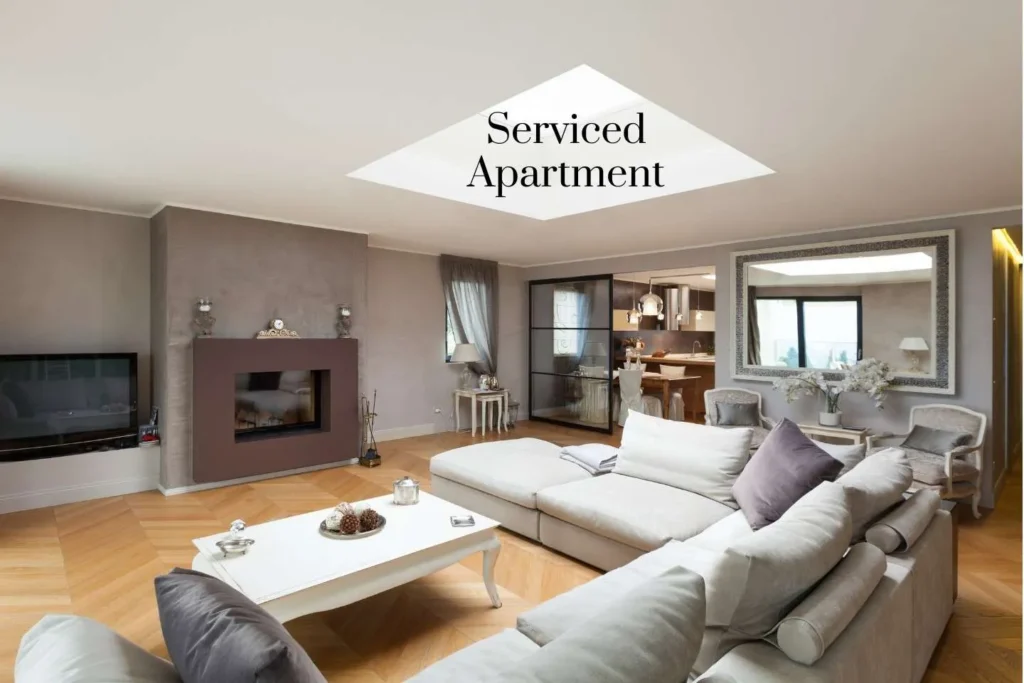
When corporate procurement officers, travel managers, and independent professionals consult a comprehensive serviced apartments booking guide, they are investigating multi-tiered operational ecosystems that diverge sharply from standard short-term vacation rentals, traditional hotel rooms, and rigid twelve-month residential leases. A pervasive error in this comparative process is assuming that all mid-term serviced options differ only in room size, nightly rates, or brand affiliation. In practice, professional transitional lodging solutions represent distinct operational philosophies, balancing automated self-service flexibility against comprehensive service inclusions and legal tenancy protections.
A primary misunderstanding involves the boundary between nightly hotel-style housekeeping services and true residential autonomy. Many travelers assume that serviced properties provide daily linen changes and comprehensive concierge desks, only to discover that mid-term operators run on weekly housekeeping rotations designed to lower operating overhead. Conversely, serviced apartments offer full kitchens, in-unit laundry, and expansive floor plans, but place the burden of utility management, trash disposal, and minor maintenance coordination directly on the occupant. True enterprise-grade evaluations differentiate between these operational mechanics to ensure the chosen lodging style aligns with the traveler’s daily professional and domestic workflow.
Furthermore, oversimplifying lease covenants and tax structures creates severe financial and legal vulnerabilities. Depending on the municipality, stays exceeding thirty consecutive days can alter tax liabilities, trigger specific tenant rights laws, or exempt the transaction from transient occupancy taxes. Analyzing comprehensive lodging alternatives requires a granular examination of how duration thresholds, cancellation penalties, and security deposit terms interact with corporate travel policies and personal budgets.
Deep Contextual Background: The Evolution of Transitional Living and Serviced Assets
The contemporary market for serviced apartments is the product of a half-century structural evolution that transitioned from roadside weekly motels and residential boarding houses to purpose-built select-service hotel brands, corporate housing networks, and software-driven serviced apartment platforms. Throughout the latter half of the twentieth century, corporate mobility was largely restricted to relocation packages involving traditional apartment leases or standard hotel blocks, which imposed immense administrative friction or unsustainable daily costs.
The expansion of the corporate extended-stay and serviced apartment sector in the 1980s and 1990s introduced a standardized middle tier featuring studio configurations, in-room kitchenettes, and tiered weekly pricing models. As project-based consulting, cross-border corporate assignments, and remote work models accelerated over subsequent decades, the demand for residential-grade living spaces with hotel-like booking flexibility expanded dramatically.
In recent years, the industry has experienced a structural convergence. Real estate investment trusts and software-enabled operators have blurred the lines between hospitality and residential real estate. Modern travelers can access everything from select-service extended-stay flags to fully furnished design apartments with integrated workspace technology, reflecting an economy where mobility is continuous rather than episodic.
Conceptual Frameworks and Mental Models for Lodging Evaluation
Evaluating and contrasting complex temporary housing options requires robust mental models that synthesize financial exposure, spatial ergonomics, and psychological endurance.
The Friction-Independence Spectrum
This model maps the trade-off between operational support and personal autonomy. Traditional extended-stay hotels minimize occupant friction by handling all maintenance, linen changes, and utility billing, but severely restrict personal customization and spatial privacy. Conversely, managed serviced apartments maximize domestic independence and space, but introduce operational friction regarding utility hookups, package delivery management, and minor maintenance troubleshooting.
The Duration-Cost Decay Curve
Lodging costs do not scale linearly with time. This mental model plots how nightly rates decline steeply when transitioning from short-term transient bookings (1–6 nights) to weekly tiers (7–29 nights) and monthly corporate structures (30+ nights). However, breaking a committed monthly structure prematurely often triggers punitive penalty clauses that erase anticipated savings, making accurate duration forecasting an essential financial variable.
The Productivity-Restoration Balance
An extended stay serves as both a workplace and a home. This framework evaluates whether a lodging option provides a distinct acoustic and ergonomic boundary for professional focus without compromising the domestic comfort required for long-term psychological restoration during multi-month deployments.
Key Categories or Variations
Serviced accommodations manifest in distinct commercial and operational typologies, each carrying unique spatial layouts, service level agreements, and cost structures.
-
Select-Service Extended-Stay Hotels: Branded hospitality properties featuring studio and one-bedroom suites equipped with functional kitchenettes, weekly housekeeping, and shared business amenities. Ideal for transient project audits and 7-to-21-night business trips. Trade-offs include limited square footage and institutional decor.
-
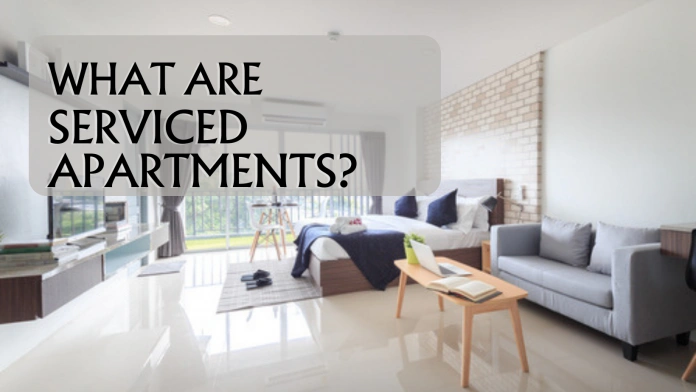
Upscale Serviced Apartment Networks: Professionally managed apartment buildings offering residential floor plans, full-size appliances, in-unit laundry, and concierge services. Ideal for executive relocations and 30-to-90-day assignments. Trade-offs include higher monthly cost and varying neighborhood contexts.
-
Corporate Housing Managed Portfolios: Fully furnished residential units leased specifically to corporate entities under master service agreements, complete with utilities and housewares included. Ideal for long-term employee rotations. Trade-offs include rigid corporate procurement approval loops and minimum stay mandates.
-
Digital Nomad and Flex-Living Platforms: Software-driven residential networks offering flexible month-to-month leases in urban centers, targeting remote professionals. Ideal for independent knowledge workers. Trade-offs include fluctuating community quality and variable internet reliability.
-
Independent Aparthotels: Budget-conscious or boutique properties offering kitchen-equipped units with minimal administrative overhead. Ideal for cost-sensitive contractors and budget travel. Trade-offs include sparse on-site amenities and inconsistent property maintenance standards.
-
Sub-leased Residential Condominiums: Private residential properties leased temporarily from owners via specialized platforms or peer networks. Ideal for those seeking authentic neighborhood integration. Trade-offs include lack of institutional recourse if maintenance failures occur.
Typology Comparison Matrix
| Serviced Typology | Typical Lease Structure | Primary Operational Strength | Main Vulnerability | Optimal User Profile |
| Select-Service Hotel | Daily/Weekly hotel rate | Predictable brand standards, zero utility setup | Cramped square footage, hotel noise | Short-term consultants (1–3 weeks) |
| Upscale Serviced Apt | 30+ day flexible agreement | Residential square footage, full kitchens | Higher price point, variable management | Relocating executives (1–3 months) |
| Corporate Housing Master | Corporate MSA / net terms | Complete turnkey setup, enterprise billing | Rigid contract terms, minimum caps | Enterprise employee deployment |
| Flex-Living Platform | Monthly digital subscription | Community integration, fast digital onboarding | Variable Wi-Fi speeds, urban noise | Remote tech workers, digital nomads |
| Budget Aparthotel | Weekly/monthly tier | Lower cost baseline, simple booking | Minimal amenities, deferred maintenance | Cost-conscious contractors |
| Private Sublease | Direct owner agreement | Unique interior design, residential feel | Zero corporate backup during emergencies | Experienced independent travelers |
Detailed Real-World Scenarios
Abstract policy requires grounding in the operational realities of corporate mobility. The following scenarios illustrate how structural choices behave under pressure.
Scenario 1: Deploying an Engineering Task Force for a Three-Month Plant Overhaul
-
Context: An industrial manufacturing firm dispatches a team of four senior engineers to oversee a complex 90-day facility upgrade in a secondary industrial market.
-
Constraints: Requirement for reliable high-speed internet, full kitchens to manage dietary needs during long shifts, and secure parking for company vehicles.
-
Decision Path: The corporate travel manager rejects standard downtown hotels due to high cumulative costs and lack of kitchen facilities. Instead, the team contracts a block of upscale serviced apartments near the industrial park under a corporate housing master agreement, securing full-size kitchens, in-unit laundry, and all utilities bundled into a single invoice.
-
Failure Mode & Second-Order Effects: Booking standard nightly hotel rooms for a 90-day project inflates the accommodation budget by over 45% and causes severe employee fatigue due to cramped quarters and lack of domestic facilities. The second-order effect demonstrates that matching lodging typology to project duration preserves capital and team morale.
Scenario 2: Managing an Executive Relocation Transition During Market Volatility
-
Context: A newly hired chief technology officer relocates across the country, requiring temporary housing for 60 days while purchasing a permanent family residence.
-
Constraints: High-end residential expectation, pet-friendly policy, proximity to executive private schools, and absolute workspace privacy.
-
Decision Path: Rather than utilizing a generic extended-stay hotel, the executive selects a managed luxury serviced apartment in an established residential neighborhood through a specialized corporate relocation platform, allowing pets and providing dedicated high-speed fiber internet and weekly deep cleaning.
-
Failure Mode & Second-Order Effects: Placing a senior executive in a transient economy extended-stay hotel during a major life transition damages talent retention sentiment and impairs professional focus. The second-order effect underscores that executive-tier temporary housing acts as an extension of total compensation and organizational respect.
Planning, Cost, and Resource Dynamics
Financial and resource allocation for transitional lodging requires managing direct and indirect expenditures that scale dynamically with duration, geographic tier, and service inclusions.
Direct and Indirect Cost Components
Direct costs include nightly or monthly base rates, resort or amenity fees, pet surcharges, parking tariffs, and departure cleaning charges. Indirect costs frequently destabilize travel budgets: hidden utility overage charges, administrative time spent reconciling itemized expense reports, and productivity losses resulting from substandard in-room workspace ergonomics or unstable internet connectivity.
Opportunity Cost and Variability
Pricing structures in the serviced apartment sector are highly sensitive to local seasonal events, corporate calendar density, and length-of-stay discount thresholds. Procurement teams must balance the temptation of low headline rates against strict early termination penalties. Opting for a cheaper monthly rate with a rigid 90-day lock-in can destroy financial efficiency if a project concludes unexpectedly after 45 days.
Range-Based Cost Dynamics (Monthly Expenditure Allocations)
| Serviced Accommodation Tier | Target User Profile | Estimated Monthly Expenditure Range | Primary Operational Inclusions |
| Budget Aparthotel | Cost-sensitive contractors | $1,800 – $3,000 / month | Basic kitchenette, weekly cleaning, utilities included |
| Select-Service Extended Stay | Standard business travelers | $3,500 – $6,000 / month | Breakfast, fitness center, studio suite, Wi-Fi |
| Upscale Serviced Apartment | Relocating professionals | $5,000 – $10,000 / month | Full kitchen, in-unit laundry, residential space |
| Executive Corporate Housing | Senior leadership / Board teams | $8,000 – $18,000+ / month | Luxury finishes, dedicated concierge, prime location |
Tools, Strategies, and Support Systems
Executing an effective transitional lodging selection process requires leveraging specific technological and administrative support systems that streamline multi-property evaluation.
-
Corporate Housing Aggregator Portals: Centralized booking platforms indexing vetted furnished apartments with standardized corporate lease terms.
-
Digital Travel Policy Compliance Dashboards: Software tools enforcing spending caps, geographic boundaries, and minimum stay rules across employee bookings.
-
Automated Expense Reconciliation Middleware: API connectors syncing itemized lodging invoices directly into corporate general ledger software.
-
Global Accommodation Security Vetting Databases: Risk intelligence tools assessing neighborhood safety, building access security, and emergency egress standards.
-
Dedicated Account Management Desks: Specialized support channels provided by corporate housing providers to resolve mid-stay maintenance or billing disputes.
-
Virtual Property Walkthrough and Inspection Tech: 3D digital twins and video verification tools allowing travel managers to audit apartment layouts before booking.
Risk Landscape and Failure Modes
Evaluating transitional housing involves understanding severe operational vulnerabilities where lodging breakdowns carry project-level consequences.
Operational and Maintenance Hazards
The most common failure mode in extended-stay arrangements is unexpected maintenance immobilization—such as HVAC system failures or major plumbing leaks in a serviced property—where response times from independent property managers lag far behind institutional hotel standards. Other hazards include sudden internet bandwidth throttling, pest control oversights, and inaccurate property descriptions regarding actual square footage or window views.
Legal and Tenancy Failure Modes
In certain jurisdictions, stays extending past thirty consecutive days grant the occupant formal tenant rights, creating complex legal hurdles if an employee needs to be relocated or if a contract terminates abruptly. Furthermore, booking through unvetted peer-to-peer platforms exposes the enterprise to sudden host cancellations and zero contractual recourse.
Governance, Maintenance, and Long-Term Adaptation
Maintaining an effective transitional lodging strategy requires continuous oversight, rigorous vendor auditing, and adaptive policy evolution.
Corporate travel committees and procurement directors must conduct semi-annual reviews of their extended-stay supplier contracts, evaluating average nightly savings against traditional hotels, reviewing employee satisfaction metrics, and auditing safety compliance certifications. As remote and hybrid work patterns continue to reshape corporate mobility, lodging policies must adapt to accommodate blended business and personal travel extensions without violating tax or compliance codes.
For organizational leaders, adaptation involves continuously assessing whether preferred housing partners maintain high-speed connectivity, robust security protocols, and flexible cancellation terms across shifting global markets.
Measurement, Tracking, and Evaluation
Assessing the efficacy and ROI of serviced apartment choices requires monitoring leading and lagging indicators across operational, financial, and employee satisfaction domains.
-
Leading Indicators (Operational Preparedness): Tracking pre-trip booking compliance rates, average lead time on housing requests, vendor onboarding velocity, and safety audit completions.
-
Lagging Indicators (Post-Stay Performance): Measuring total cost-per-assignment savings versus traditional hotels, employee retention survey scores, invoice dispute frequencies, and average length of stay accuracy.
-
Qualitative vs. Quantitative Signals: Quantitative metrics include tracking aggregate accommodation budget variances, incidental fee totals, and cancellation penalty losses. Qualitative signals encompass employee feedback regarding domestic comfort, kitchen utility satisfaction, and the smoothness of check-in logistics.
Common Misconceptions and Oversimplifications
-
Myth: Serviced apartments and traditional extended-stay hotels offer identical living experiences and service models.
-
Correction: Extended-stay hotels provide structured hospitality services and daily management, whereas serviced apartments offer residential square footage and self-managed domestic routines.
-
-
Myth: Booking a monthly serviced rate always guarantees total financial flexibility if travel dates shift.
-
Correction: Many monthly rates enforce strict minimum stay lock-ins and levy severe penalty recalculations if a lease is shortened.
-
-
Myth: All serviced apartments come equipped with professional-grade enterprise Wi-Fi networks.
-
Correction: Residential properties frequently rely on consumer broadband packages that lack enterprise-grade encryption and VPN stability.
-
-
Myth: Standard corporate travel insurance covers personal liability and property damage during multi-month apartment stays.
-
Correction: Extended residential stays often require specialized corporate master policy endorsements to cover property loss or accidental damage.
-
-
Myth: Flex-living residential networks are fully optimized for secure corporate data transmission and high-stakes executive work.
-
Correction: Many flex-living spaces rely on shared residential Wi-Fi networks that lack enterprise-grade security protocols.
-
-
Myth: The longer the corporate stay, the simpler the administrative booking and billing process becomes.
-
Correction: Extended stays often involve complex lease addendums, security deposit escrow accounts, and detailed utility allocation agreements.
-
Ethical, Practical, and Environmental Considerations
Operating and procuring transitional lodging portfolios carries profound ethical and environmental responsibilities. Serviced apartment units contribute significantly to local water, energy, and waste consumption, prompting forward-thinking enterprises to partner with housing providers that implement energy-efficient appliances, recycling programs, and sustainable building management practices. Furthermore, corporations must ensure that their utilization of residential housing stock does not exacerbate local housing supply shortages or displace long-term community residents in high-demand urban centers.
Conclusion
Evaluating, structuring, and executing serviced apartment programs requires an advanced synthesis of financial discipline, operational logistics, and human empathy. By looking past surface-level marketing claims and applying sophisticated mental models—such as the Friction-Independence Spectrum and the Duration-Cost Decay Curve organizations can transform transitional housing management from an ad-hoc administrative burden into a predictable, highly leveraged operational asset. Whether deploying master-leased apartments, executive townhomes, or serviced suites, the ultimate measure of success is the uncompromised protection of employee wellbeing, productivity, and fiscal integrity across every corporate deployment horizon.